U.S. President Donald Trump stated on Sunday that Russia and Ukraine had agreed to an "energy ceasefire" in their 4 1/2-year-old conflict. However, his announcement was immediately followed by reports from Kyiv detailing continued Russian attacks on Ukrainian energy sites, casting doubt on the immediate implementation of such an agreement. Trump's brief social media post simply declared that the ceasefire took effect immediately, urging, "Do not break it!"
Ceasefire Claims and Reality
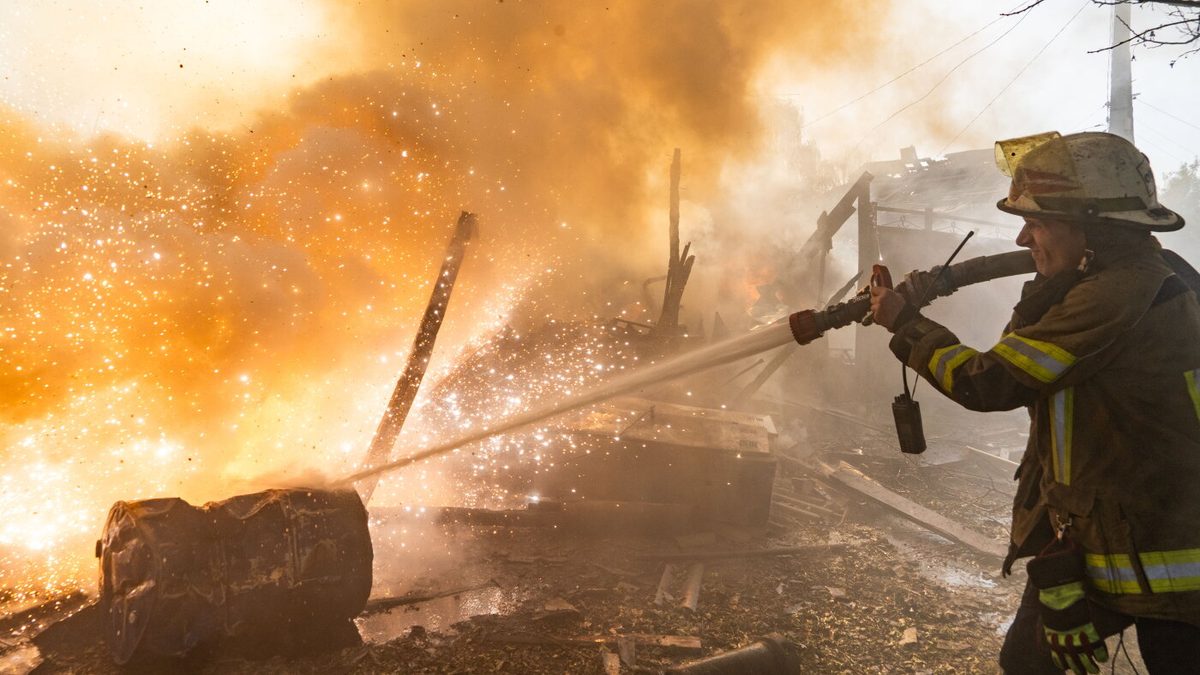
Ukrainian President Volodymyr Zelenskyy acknowledged President Trump's announcement as "good news for everyone," but simultaneously reported that Ukrainian skies were "infested with Russian 'shaheds' all day today," referring to drones. He also confirmed glide bomb strikes and attacks on Ukraine's energy infrastructure, specifically mentioning a power plant in Kharkiv being hit that evening. The presidential office corroborated that the Kharkiv attack occurred after Trump's ceasefire post.
Zelenskyy expressed Ukraine's readiness "to refrain from striking Russian energy infrastructure" and stated they expected the same commitment from Russia. He noted that Russia has consistently targeted Ukrainian civilians' power, heat, and running water as a strategy to diminish public resistance to its full-scale invasion, a tactic Ukrainian officials describe as "weaponizing winter." Zelenskyy also recounted that Russia had previously responded to many Ukrainian de-escalatory proposals with a categorical "nyet," expressing hope that a different response might be given to America and the world this time. He confirmed ongoing contact with the U.S. and thanked Americans for their support, also mentioning discussions with Canadian Prime Minister Mark Carney, Finnish President Alexander Stubb, and NATO Secretary-General Mark Rutte.
This is not the first time Trump has made such a claim; on September 14, he similarly stated that both countries had agreed "not to hit" each other's energy infrastructure, a proposal that ultimately did not materialize despite Zelenskyy's expressed willingness to comply if Russia did.
Political Exchanges and Elections
Earlier on Sunday, Zelenskyy had indicated in an interview that Kyiv was prepared to halt strikes on Russian refineries if Moscow ceased its attacks on Ukraine's energy system, and he had asked Trump to pressure the Kremlin to agree. The President's ceasefire announcement came amid recent political exchanges, including Trump suggesting it was time for Ukraine to elect a new president, blaming Zelenskyy for high U.S. diesel prices. In response, Zelenskyy stated that Ukraine could hold elections if Russia agreed to a 60-day total ceasefire, acknowledging that holding an election during wartime is currently unlawful under martial law, which has been in effect since February 2022. The Ukrainian constitution bars elections while martial law is active, and logistical challenges, including Russian occupation of a fifth of the country and millions of displaced Ukrainians, make a nationwide vote widely seen as impossible.
Ukrainian Strikes on Russian Infrastructure
While Trump advocated for a ceasefire, Ukraine continued its campaign against Russian infrastructure. A drone attack on Sunday successfully shut down a data center in Vladimir, east of Moscow, operated by technology giant Yandex. This marked the third strike on Yandex facilities in four days. The attack caused widespread outages across Yandex services, affecting users in dozens of Russian cities, as well as in Kazakhstan, Belarus, and Armenia, preventing access to services like taxi orders and banking. Yandex confirmed that operations at the data center were "completely halted" but reported no injuries. Previous drone attacks had taken Yandex data centers offline in the Ryazan region on Thursday and the Kaluga region on Friday. Yandex, often referred to as Russia's Google, operates the country's most popular search engine and numerous digital services.
Separately, search and rescue operations concluded in Zaporizhzhia following a Russian bombing on Saturday, with Zelenskyy reporting 23 fatalities, including four children, and over 30 wounded. In Russia's Bryansk border region, local officials reported one man killed and two women wounded in a Ukrainian drone strike on Sunday.



No comments yet. Be the first to share your thoughts.